



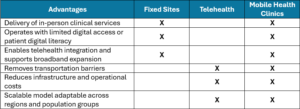
According to a study published in September 2025 by Georgetown University’s Center on Health Insurance Reforms, Everyone should be able to get the health care they need, no matter where they live. Yet, despite nearly $5 trillion spent on health care each year, millions of Americans living in hard-to-reach areas are unable to access basic health care services. Through mobile health, which brings health care workers and clinics directly into the community using specialized vehicles, can be a cost-effective way to increase the availability and proximity of care for many. Mobile health vehicles often expand the reach of fixed-site facilities and telehealth, particularly in rural areas, or operate independently in regions that fixed-site facilities and telehealth can’t reach. They bring primary care, mental health, addiction treatment, dentistry, and more to homes, churches, schools, and worksites in communities across the country.
Mobile health clinics play a crucial role in providing continuity of care by ensuring consistent, accessible healthcare services to underserved populations. These mobile units act as a reliable point of contact for patients who may face challenges accessing traditional healthcare facilities due to geographic, financial, or logistical barriers. By offering care directly to communities, mobile clinics help patients stay on top of routine check-ups, chronic disease management, and preventive care, ensuring they receive continuous monitoring and timely interventions. This ongoing care is essential for managing chronic conditions like diabetes or hypertension, conducting regular screenings, and addressing minor illnesses before they escalate. Furthermore, mobile health providers can collaborate with patients’ primary care physicians, ensuring coordinated care and seamless transitions between services, ultimately promoting better long-term health outcomes and improving overall patient engagement with the healthcare system.
Mobile health helps bridge access gaps by expanding service offerings, providing a cost-effective strategy to increase both the availability and proximity of care. Mobile units extend the reach of fixed-site facilities and telehealth, particularly in rural and underserved communities, and can operate independently in areas where traditional clinics and virtual care are not feasible.
Every child deserves the chance to grow, succeed, and reach their full potential, and that starts with dependable access to healthcare. Breaking down barriers to health and wellness by bringing care directly to the school setting provides high-quality, accessible healthcare services, ensuring that students and staff have the support they need to succeed, both academically and in life.
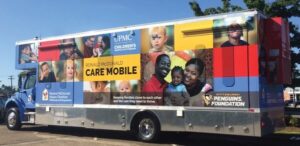
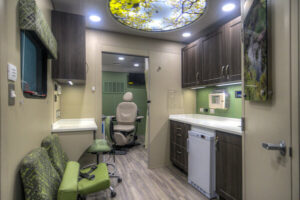
School-based mobile health clinics are designed to meet the diverse health needs of students and staff. They offer flexible care options as fully equipped mobile medical vehicles that provide convenient and timely healthcare without students needing to leave campus for initial visits and follow up. These services not only support student well-being but also provide staff with easy access to wellness care, enhancing the overall health environment in schools.
Many health centers operate mobile pediatric care units that function as fully equipped health clinics on wheels. These mobile units travel to districts throughout the academic year, offering comprehensive healthcare services to students from kindergarten through 12th grade.
And by collaborating with a student’s primary care provider or offering services to those without one, mobile units ensure that every student has access to coordinated, continuous care.
Comprehensive mobile health care services can include:
These services are the backbone of school wellness programs, ensuring that students have the physical, emotional, and academic support they need to excel in school and beyond.
School-based healthcare models are about more than just providing medical services, it’s a long-term investment in the future health of our communities. By meeting students where they are, we remove barriers to care, helping them stay engaged in school, reducing absenteeism, and performing better academically. Healthy students are more likely to succeed in the classroom, and those who succeed in school are more likely to build healthier, more prosperous futures.
Through strong district partnerships and trusted accessible mobile health centers, every child has the opportunity to thrive — not just in school, but in life.

In addition to school-based clinics, mobile units also support community health programs, particularly to underserved populations. Mobile clinics play a vital role in ensuring continuity of care for Department of Health and county health programs by offering consistent, accessible services to those who may face barriers to traditional healthcare, including those in rural areas, low-income families, and the elderly by providing:
By expanding healthcare access through mobile units, they not only provide immediate care; they also foster stronger, healthier communities that can thrive for generations.
School and community-based health clinics represent a powerful solution to improving the overall health and wellness of students, families, and communities, making healthcare more accessible, and sustainable for all. Together, with the support of school districts, health departments, and communities, health systems can ensure that every student has the resources they need to succeed, today and in the future.
Integrating health into the school day and the broader community builds a foundation for healthier lives, stronger communities, and brighter futures.