

PROFESSIONAL SPACE IN MOTION
Healthcare delivery has never been one-size-fits-all, but for the longest time, that’s how it worked. Patients are expected to travel to fixed locations, navigate schedule backlogs and work around a complex healthcare system. In many communities, particularly in rural and underserved areas, patients can have a hard time accessing needed care, leading to reduced visits or missing out on care entirely.
To counter these issues of healthcare accessibility, more and more care is going mobile. Mobile health clinics are appearing in school parking lots, outside homeless shelters, at job sites and along rural routes, where traditional care models often struggle to gain a foothold. The mobile units aren’t considered a luxury; for many, they are a reliable option for health screenings, preventative care, chronic condition management and follow-up visits.
As a result, healthcare is becoming more responsive, more adaptive and more rooted in the real lives of the people it serves. Healthcare delivery meets patients where they are, timely and effectively.
Patients can face significant challenges depending on how close they live to a hospital or clinic, whether they can take time off work or if they have reliable transportation. Mobile units help close that gap by meeting people where they are, which is why they are becoming a key part of delivering care in both rural and urban communities throughout the United States.
Whether it’s a mobile dental clinic in an elementary school parking lot or a multi-health clinic set up at a community event, these units are filling real-life needs. These mobile clinics offer preventive care, dental care, chronic disease checkups, screenings, mental health services and more. Their mobility and flexibility make them vital in today’s healthcare landscape.
What used to be a patchwork of grant funding is now becoming a recognized part of the broader healthcare system. Public health agencies, policymakers and healthcare organizations are taking mobile healthcare seriously and are working to make it a long-term strategy.
In 2022, the Mobile Health Care Act made it easier for health centers to use federal funds to launch and operate mobile units. This was a significant shift. Previously, many programs struggled to find sustainable funding, relying heavily on short-term grants or donations. With more structured and long-term options available, organizations can now invest in mobile care with certainty.
With stronger federal support and more structured funding options, organizations now have new opportunities to develop and sustain lasting programs. This shift opens doors for community clinics, hospitals and nonprofits alike to expand their reach without the high overhead costs associated with bricks-and-mortar facilities.
Some states are even incorporating mobile units into their Medicaid programs. Local governments are utilizing them as part of their emergency preparedness plans. Universities are deploying mobile clinics to rural communities for cancer screenings. Mobile healthcare isn’t just convenience anymore; it has become a core value of a larger system.
For many providers, the challenge today isn’t about delivering care but doing it sustainably. Staffing shortages, inflation and shrinking margins are prompting healthcare organizations to reassess their operational strategies.
Mobile units offer a way to reduce costs without compromising quality. They’re less expensive to launch than new buildings, allow leaner staffing models and can be deployed strategically to cover multiple communities on a rotating schedule. This allows limited resources to go further, a value every organization should consider.
Mobile clinics are efficiently able to rotate between several communities, serving different populations throughout the week. One day, a combination mobile medical and dental clinic could be in a rural town offering chronic disease management, and the next, it could be at a health fair providing dental care. This versatility enables organizations to stretch their resources further and deliver care more strategically.
This is also a great way to test new service models or reach new patient populations without committing to the overhead of a whole facility. This is like a pop-up approach to medicine that’s efficient, responsive and patient-focused.
One of the biggest challenges in healthcare, especially in underserved or marginalized communities, is trust. Individuals who’ve faced discrimination, language barriers or bureaucratic obstacles often avoid seeking care altogether. Mobile clinics, when implemented effectively, have the power to break down those walls.
When your staff meet people in their neighborhoods, whether at schools, churches, shelters, community centers or even shopping center parking lots, mobile units naturally foster more approachable and familiar environments. Providers have the opportunity to form lasting relationships with patients over time, becoming a recognizable and consistent presence in their lives. A mobile health clinic is a roving billboard, bringing positive recognition when traveling around your target neighborhoods.
To succeed, mobile healthcare teams need to be culturally competent. That means hiring bilingual staff, understanding local customs and concerns, while creating an environment where patients feel seen, heard and respected. When people feel understood, they’re more likely to return for their follow-ups, manage chronic conditions and engage proactively in their care.
In this way and more, mobile clinics do more than provide services; they build bridges within communities. This can then lead to lasting improvements in health outcomes, especially in communities where trust in the healthcare system is fragile or fractured.
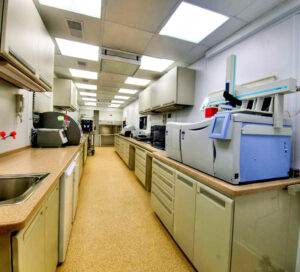
A Fast-Changing LandscapeMobile healthcare isn’t just growing, it’s evolving. The market is expanding rapidly, and technology is keeping pace with demand. Newer units are outfitted for everything from digital diagnostics to remote telehealth consultations. Every interior layout is designed with intention, making equipment more adaptable to serve a broader community.
Hospitals, public health departments, universities, churches, charitable organizations, Indian Health Services and even corporations are investing in mobile clinics to utilize them as core components of their care strategies. The pace of innovation is accelerating, and forward-thinking organizations are positioning themselves to stay ahead of the curve.
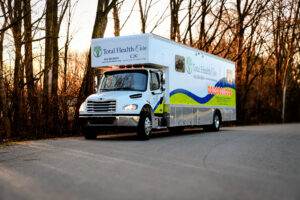
The COVID-19 pandemic hit hard and healthcare systems around the country were forced to adapt.
The pandemic revealed the fragility of the healthcare system and the importance of flexibility. Mobile care filled gaps quickly and effectively, often reaching communities that had been underserved. It also showed the importance of being able to bring care directly to people during a public crisis.
From the pandemic, the lesson was clear: mobility isn’t just about convenience, but about resilience. During challenging times, healthcare must adapt quickly. Mobile units make this possible and will continue to play a pivotal role moving forward.
Starting a mobile clinic program requires careful planning to achieve success.
Many programs fail if their units are too small and lack the ability to carry heavy medical equipment, are too complicated to operate or aren’t designed for the type of care being delivered.
The Future of CareAs healthcare becomes increasingly community-focused and technology-driven, mobile units are poised to play a significantly larger role in the future. They offer a flexible, cost-effective way to expand access, improve outcomes and make care more human-centered.
Whether you’re a hospital or university seeking to reach rural patients, a nonprofit serving vulnerable populations or a public health department preparing for future challenges, mobile clinics offer real advantages. They’re not a luxury, but a more innovative, scalable solution to some of the most pressing problems in healthcare today.
Buildings don’t bind the future of healthcare delivery. It’s out on the road, bringing care to people where they live and work, and building relationships that allow people to regain their trust in the healthcare system.