



Heart disease remains the leading cause of death in the United States. In 2025, it was estimated that nearly 700,000 Americans died from heart disease, according to the latest CDC data. Stroke, another major cardiovascular and cerebrovascular concern, accounted for almost 167,000 deaths in 2024. Together, heart disease and stroke continue to place a significant burden on patients, families, and the healthcare system. The CDC estimates that heart disease and stroke cost the healthcare system more than $223 billion annually, with additional indirect costs.
The good news is that many of the risk factors associated with cardiovascular disease can be identified and managed before they lead to a serious medical event.
The challenge is getting preventive care to the people who need it.
For patients living in rural communities, healthcare deserts, or areas with limited access to specialists, traveling to a hospital or medical center for routine cardiovascular screening may not always be practical. Transportation, distance, cost, and work schedules can all become barriers to preventive care. Mobile health clinics provide an opportunity to bring that care directly into the community.
Rather than asking patients to travel to healthcare facilities, rural health mobile clinics allow healthcare organizations to take services on the road. A properly designed mobile cardiovascular clinic can provide health screenings, cardiovascular testing, risk assessments, patient education, and referrals, meeting individuals at convenient locations such as community centers, churches, workplaces, schools, senior living communities, and rural towns.
Preventive cardiology focuses on identifying cardiovascular risks before they result in a major medical event, such as heart failure. It can include lifestyle education, routine health measurements, cardiovascular testing, and ongoing management of existing risk factors.
Three basic approaches to prevention using mobile clinics in rural settings:
Mobile health clinics can support all three approaches by making preventive services more accessible.
One of the simplest ways to start assessing cardiovascular health is to know some basic health numbers.
Blood pressure, cholesterol, blood glucose, and body mass index can provide important information about an individual’s cardiovascular risk.
According to the CDC, 47.7% of U.S. adults had hypertension during August 2021 through August 2023. Among adults with hypertension, only 20.7% had their blood pressure controlled below 130/80 mm Hg.
High cholesterol is another common risk factor. CDC data found that 11.3% of adults age 20 and older had high total cholesterol during the same period.
A mobile health clinic changes the traditional healthcare model. Instead of requiring patients to schedule an appointment, arrange transportation, and travel to a medical facility, a mobile clinic can be positioned where people already live, work, and gather.
A cardiovascular-focused mobile health clinic can be equipped to provide a range of services to rural communities, including:
The specific services offered will depend on the healthcare organization’s clinical program, equipment, and staffing. The important point is that the vehicle becomes an extension of the healthcare system and offers telemedicine connectivity to rural areas, accessing medical records in real time.
A purpose-built mobile health clinic can be designed around the specific cardiovascular services a healthcare organization wants to provide, such as:
An electrocardiogram can help healthcare professionals identify irregular heart rhythms and other cardiac abnormalities.
Providing ECG/EKG testing in a mobile setting can make basic cardiac evaluation more accessible to patients who may otherwise have difficulty traveling to a medical facility.
Stress testing evaluates how the heart performs when it is working harder. Depending on the clinical program and equipment, a mobile unit can be designed to accommodate appropriate stress-testing services in a controlled healthcare environment.
Mobile stress testing can be particularly useful for extending cardiovascular diagnostic capabilities beyond the traditional hospital or clinic setting.
Ultrasound provides a non-invasive way to examine structures and blood flow within the body. In a cardiovascular mobile health clinic, ultrasound technology can support screenings such as carotid artery, abdominal aortic aneurysm, peripheral artery disease (PAD) screenings, and other vascular assessments. The equipment and configuration can be selected based on the specific services the healthcare organization plans to provide.
Cardiovascular health does not exist in isolation. Blood pressure, cholesterol, blood glucose, weight, and other measurements all contribute to a patient’s overall risk profile.
Mobile health clinics can combine these basic health screenings with cardiovascular testing to provide a more complete picture of an individual’s health.
For rural healthcare systems, mobile clinics can also extend the geographic reach of existing services without requiring the organization to build a permanent facility in every community it serves.
Screening is only one part of preventive cardiovascular care. Education is equally important.
Mobile health clinic staff must be trained to identify cardiovascular events and be prepared to provide patients with information about exercise, nutrition, tobacco use, blood pressure, cholesterol, diabetes, and other cardiovascular risk factors.
The staff should also be prepared to educate patients about the warning signs of heart attack and stroke and when emergency medical attention is necessary.
This more comprehensive approach is all possible with a mobile cardiac program.
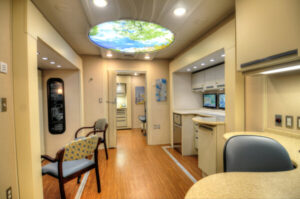
Not every mobile health clinic needs to be built the same. Design the vehicle around the services the healthcare organization intends to provide. LifeLine Mobile provides detailed floor plans and engineering documentation for those seeking to have an efficient, purpose-built mobile health clinic. In addition, The Rural Mobile Healthcare Toolkit offers promising evidence-based models and resources to support organizations implementing mobile healthcare programs in rural communities.
A cardiovascular screening clinic design may include:
The workflow is just as important as the equipment. Patients should be able to enter the vehicle, complete registration, receive their screenings and testing, meet with clinical staff, and exit without unnecessary delays.
The Cardio team should have an ergonomic work environment with sufficient space to manage patients, countertop space for testing and processing samples, flexibility for a variety of tests and patient experiences.
A well-designed mobile clinic and properly trained staff can provide a professional healthcare environment while letting patients receive services in a convenient, familiar community setting.
Cardiovascular health screenings are an important part of occupational health, especially for employees working in physically demanding or high-stress environments. First responders, including firefighters, police officers, and EMTs, can benefit from convenient screenings that help identify potential cardiovascular risk factors before they become serious health concerns. Mobile health clinics make it possible to bring these services directly to workplaces, fire stations, police departments, and other locations. By bringing cardiovascular screenings to employees, organizations can make preventive care more accessible, encourage early detection, and support the health and well-being of the people who serve their communities.
The potential of mobile cardiovascular care extends beyond a single screening event.
A mobile health clinic can become a recurring part of a health system’s community outreach strategy. Regular visits can help establish relationships with patients and communities while creating additional opportunities for preventive care.
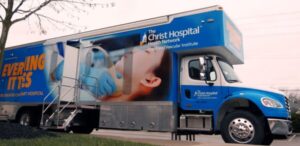
For health systems, mobile clinics can also provide a flexible way to expand the geographic reach of existing programs, bring specific services to multiple locations, and operate as a roving billboard – advertising the parent hospital or facility.
The result is a healthcare model that is flexible, scalable, and designed around community needs.
Telemedicine has expanded access to healthcare, but virtual visits cannot always replace in-person care. Mobile telemedicine bridges this gap by combining in-person assessments, testing, sample collection, and hands-on care with remote access to physicians and specialists. This approach allows medical professionals to extend their expertise across a broader patient population while providing personalized care. It can be especially valuable for rural communities and at-risk patients who need timely intervention.
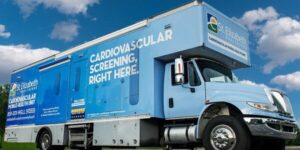
The Mobile Heart Unit operating out of The Christ Hospital in Cincinnati provides screenings for as low as $75. The St. Elizabeth CardioVascular Mobile Health Unit also offers screenings, cardiovascular risk assessments, and education at convenient locations. Screenings take about 30 minutes, and patients receive initial results right away, along with a one-on-one discussion with a health educator to reduce the risk of cardiac events.
Instead of waiting for patients to come to the healthcare system, mobile health clinics bring healthcare to the patient.
That is the power of mobile healthcare: making preventive cardiovascular care more accessible to rural, underserved, and hard-to-reach communities.
Learn more about the effectiveness of mobile healthcare: Innovations in Healthcare Delivery