



Rural America faces a deepening healthcare crisis. Over the past twenty years, nearly 200 rural hospitals have closed, with 36 in just the past six years. Hundreds more are at risk due to financial pressures. Residents often travel long distances for care, contributing to higher mortality rates from chronic conditions, delayed diagnoses, and preventable emergencies.
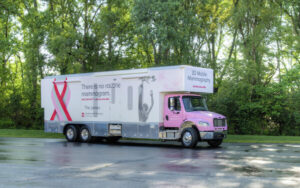
In response, hospitals and health systems increasingly deploy mobile health clinics to deliver services directly to underserved areas. These units address transportation barriers, provider shortages, and limited fixed infrastructure while generating measurable returns through reduced emergency visits and better chronic disease control. Recent data indicate that roughly 65% of the more than 3,600 mobile clinics nationwide serve rural healthcare deserts, reflecting significant growth in mobile healthcare, as mobile clinics bridge communities and clinical facilities.
Hospitals leverage mobile clinics in multiple strategic ways, ranging from everyday primary care to advanced, technology-enabled services. Emerging initiatives such as the Advanced Research Projects Agency for Health (ARPA-H) PARADIGM program point toward even more sophisticated capabilities in addressing rural health disparities. The program specifically funds and develops next-generation mobile health clinics and rugged, scalable vehicle platforms for rural communities.
Below are seven key approaches in addressing rural health:
The most foundational use involves bringing routine primary care, immunizations, screenings, and health education to community sites, school based health centers, churches, or workplaces. Hospitals and universities staff these units with physicians, nurse practitioners, or physician assistants who perform well visits, manage common conditions, and provide vaccinations. By eliminating the need for patients to travel long distances, mobile clinics increase utilization among uninsured, underinsured, and working families who might otherwise forgo care. Programs often partner with local organizations to schedule regular stops, creating predictable access points. This model reduces reliance on emergency departments for non-urgent issues and supports population health goals that hospitals pursue under value-based care arrangements. Evidence consistently shows high patient satisfaction and improved adherence to preventive schedules.
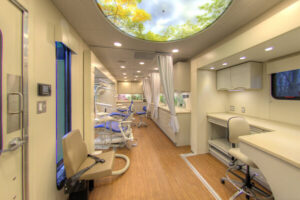 Medical institutions use mobile medical units to bring costly diagnostic services to rural areas that cannot support them. Mobile MRI units, for example, rotate among critical access hospitals and community sites, reducing patients’ travel. Mobile mammography clinics provide breast cancer screenings in remote counties, while other units offer ultrasound, dental services, point-of-care laboratory testing, bone density scans, and much more. These services support earlier detection and timely referrals to sponsoring hospitals for advanced care. Shared mobile equipment also helps smaller hospitals preserve service lines, strengthen regional networks, and maintain referral pathways.
Rural populations experience elevated rates of diabetes, hypertension, heart failure, and COPD. Mobile clinics allow service providers to conduct regular monitoring, medication adjustments, education, and follow-up visits closer to patients’ homes. Some programs incorporate community paramedicine or mobile integrated health models in which trained paramedics or nurses perform community visits, reducing readmissions. By intervening earlier, rural clinics and hospitals lower expensive downstream utilization while building longitudinal relationships that improve outcomes. Social workers or community health workers on mobile clinics in rural areas frequently screen for social determinants such as food insecurity or transportation needs and connect patients to resources, amplifying the clinical impact.
Mobile units serve as telehealth hubs by providing reliable connectivity in rural areas. On-board clinicians perform examinations while remote specialists at the main hospital or affiliated centers join via video for consultations in cardiology, pulmonology, behavioral health, or other fields. This hybrid approach expands the reach of a limited specialty workforce and enables complex decision-making without requiring every patient to travel. Hospitals benefit from tighter integration of care pathways and higher capture of appropriate referrals for procedures or inpatient stays when needed.
Maternal health disparities remain pronounced in rural regions, where obstetric clinics have closed at high rates. Hospitals, universities, and rural clinics deploy mobile medical units for prenatal visits, postpartum checks, reproductive health screenings, and education. Some units focus specifically on high-risk populations or partner with local clinics to extend perinatal care. These services help identify complications earlier, support healthy pregnancies, and reduce the need for emergency transfers. By meeting patients where they live and work, hospitals improve continuity of care and trust in communities that may view distant facilities as inaccessible.
Mental health and substance use treatment shortages are acute in rural areas. Mobile crisis units deliver counseling, medication for opioid use disorder, crisis intervention, and screenings in non-stigmatizing settings. Hospitals use mobile clinics to extend behavioral health teams, facilitate local coordination with ongoing care, and reduce emergency department boarding for psychiatric needs. Some units participate in disaster or surge response, providing triage and temporary capacity when fixed facilities are overwhelmed. This flexibility strengthens community resilience while aligning with hospital community outreach and population health mandates.
Looking ahead, hospitals are collaborating on platforms that move beyond simple primary care vans toward true mobile hospital-level capability. The growing interest in all-electric vehicles is not yet practical for mobile health clinics that require significant electrical capacity to support services such as dental care or mammography. These vehicles are generally limited to smaller 22- to 28-foot units and rely on 12-volt systems designed to be more battery-friendly. And they lack the space or electrical capacity needed to support true hospital-grade operations.
Air conditioning, sterilization, and heating and cooling systems place significant demands on electrical power, making them difficult to support with all-electric or solar systems alone. This is another reason all-electric mobile clinics tend to be smaller, with a single AC unit and limited medical equipment.
However, in the interim, hybrid mobile health clinics incorporating solar power are becoming more common and may offer a practical alternative. All-electric vehicles remain well suited to services with lower electrical demands, but not to complex medical operations requiring hospital-grade space, equipment, and power.
 Hospitals that invest in mobile clinics in rural areas improve access to care while helping reduce unnecessary emergency department visits and hospitalizations for conditions that can be managed through timely outpatient care. These programs can also improve chronic disease management, strengthen patient outcomes, and build stronger relationships between hospitals and the rural communities they serve. By preventing avoidable healthcare costs and improving outcomes, mobile health clinics can deliver a meaningful return on investment.
Successful programs require careful planning, including appropriate staffing, reliable vehicle maintenance, and sustainable funding. Hospitals can combine multiple funding sources, including the Rural Health Transformation Program funding, grants, community benefit funds, and appropriate medical billing. Just as important is developing genuine partnerships with rural communities to ensure services address local healthcare needs.
Purpose-built mobile health clinics also provide the technology and data systems needed to connect patient encounters with a hospital’s broader electronic health record. Their flexibility allows hospitals to provide routine outreach, rotate specialty services between communities, and respond to emerging healthcare needs or public health emergencies. This adaptability makes mobile clinics particularly well suited to the geographic and financial challenges facing rural healthcare providers.
Mobile health clinics are changing how hospitals deliver local care. High-quality healthcare no longer has to be confined to a permanent facility. By bringing services directly to rural communities, hospitals can reduce the burden of long-distance travel, improve access to preventive and specialty care, and help patients receive the services they need when they need them. With the right planning, technology, and community partnerships, mobile health clinics can become an important part of a sustainable rural healthcare strategy.