



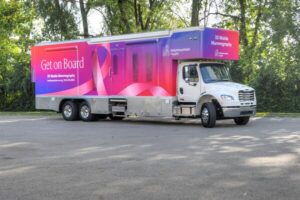
The fight against breast and cervical cancer in the United States has long been shaped by one defining truth: early detection saves lives. Yet for many women, particularly those in rural or underserved communities, access to screening is not simply about awareness. It is about proximity, affordability, and convenience. While public health programs have made meaningful progress in expanding access, one of the most transformative solutions has been the rise of mobile mammography clinics. Supported in part by the Centers for Disease Control and Prevention’s National Breast and Cervical Cancer Early Detection Program (NBCCEDP), these clinics are reshaping how and where women receive life-saving care.
The NBCCEDP was established through the Breast and Cervical Cancer Treatment Program (BCCTP) in response to a growing concern: too many women were being diagnosed at advanced stages due to limited access to preventive services. From the outset, the program focused on reducing financial barriers to screening. Over time, however, it became clear that cost was only part of the challenge. Geography, transportation, and gaps in healthcare infrastructure also played a critical role in determining whether women could access care.
Subsequent legislation, including the Breast and Cervical Cancer Prevention and Treatment Act, expanded the program’s impact by allowing states to provide Medicaid coverage for women diagnosed through NBCCEDP. This ensured that screening would not exist in isolation. Instead, women who received a diagnosis could move directly into treatment without delay or financial uncertainty.
While these policy advancements strengthened the continuum of care, they also underscored a persistent issue: access to screening facilities remained uneven. This is where mobile mammography clinics have become essential.
Breast cancer remains one of the most commonly-diagnosed cancers among women in the United States, and routine mammography is one of the most effective tools for detecting it early, often before symptoms appear. Yet access to mammography facilities is not evenly distributed. In many rural areas, women may need to travel hours to reach the nearest imaging center. For those balancing work, childcare, or limited transportation, this distance becomes a significant barrier. Even in urban environments, underserved populations often face logistical and financial obstacles that delay routine screenings.
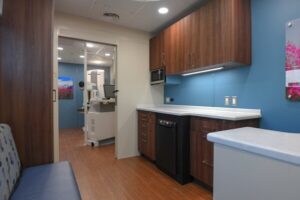
Mobile mammography clinics address these challenges by bringing services directly into communities. Instead of requiring patients to navigate complex healthcare systems, these units integrate into everyday life, appearing at workplaces, community centers, churches, schools, and health fairs. This shift from centralized care to community-based delivery represents a major advancement in improving screening rates.
These clinics provide the same high-quality imaging services found in traditional facilities. Equipped with advanced technology and staffed by trained professionals, they offer screenings in a convenient, approachable setting. For many women, this reduces both logistical barriers and the anxiety often associated with clinical environments.
The value of mobile mammography extends far beyond convenience. By eliminating long travel times and minimizing disruptions to daily life, mobile units remove some of the most common reasons women delay or forgo screening.
Through partnerships with the NBCCEDP, many mobile programs provide screenings at low or no cost to eligible women. This combination of affordability and accessibility is critical. It ensures that financial limitations do not stand in the way of early detection.
Equally important is the role mobile clinics play in education and outreach. By operating within communities, they serve as visible reminders of the importance of regular screening. They also create opportunities for direct engagement, helping to build trust and awareness among populations that may be hesitant to seek care.
Screening is only the first step. Ensuring that patients receive timely follow-up care after an abnormal result is just as important. Many mobile mammography programs incorporate patient navigation services to address this need.
Patient navigators help guide individuals through the next stages of care, whether that involves scheduling diagnostic imaging, coordinating with hospitals or specialists, arranging transportation, or understanding medical results. This support is especially valuable for patients who may be unfamiliar with the healthcare system or facing logistical challenges.
By maintaining continuity of care, patient navigation reduces the likelihood that women fall through the cracks after an initial screening. It transforms mobile mammography from a one-time service into part of a coordinated care pathway.
One of the strengths of mobile mammography programs is their flexibility. Unlike fixed facilities, mobile units can be deployed strategically to areas with the greatest need. Using data on screening rates, cancer incidence, and population health trends, programs can identify underserved regions and direct resources accordingly.
This targeted approach improves both efficiency and impact. It ensures that screenings are delivered where they can make the greatest difference, helping to reduce disparities in early detection.
The results of this strategy are evident in the broader success of the NBCCEDP. Since 1991, the program has served more than 6.5 million women and provided over 16.8 million screening examinations. These efforts have led to the detection of tens of thousands of breast cancers, along with numerous premalignant lesions that can be treated before progressing to invasive disease.
Recent data further highlights the ongoing importance of these services. As highlighted in the table below, in Program Year 2024, nearly 285,000 women received breast cancer screening and diagnostic services through NBCCEDP-supported programs, a significant increase from previous years. Many of these screenings were conducted through mobile units and community-based initiatives, demonstrating the continued reliance on flexible, accessible care models.
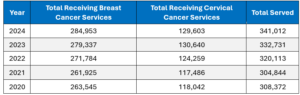
Despite this progress, significant gaps remain. Millions of women across the United States are eligible for NBCCEDP services but are not currently being reached. Barriers such as limited program capacity, lack of awareness, and ongoing logistical challenges continue to prevent some women from accessing care.
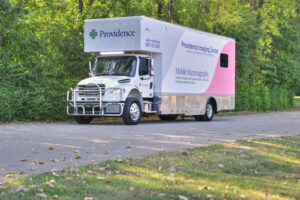
Expanding mobile mammography programs is one of the most effective ways to close this gap. In addition to delivering services, these units act as highly-visible outreach tools. Their presence in a community raises awareness and reinforces the importance of preventive care. In many ways, each mobile clinic serves as both a healthcare provider and a moving ambassador for early detection.
Mobile clinics are particularly impactful in rural regions, where healthcare infrastructure is often limited. In these areas, a single mobile unit can serve multiple communities, effectively creating a network of access points where none previously existed.
They also play a critical role in reaching American Indian and Alaska Native populations, where culturally-responsive care and strong community partnerships are essential. By working closely with tribal health systems and local organizations, mobile programs can deliver services in a way that respects cultural values and build trust.
The success of mobile mammography initiatives depends heavily on collaboration. Partnerships with local health departments, employers, nonprofit organizations, and faith-based groups help identify women in need and ensure that services are well-utilized.
These partnerships also strengthen outreach and education efforts. When trusted community organizations are involved, women are more likely to engage with screening programs and follow through with care. This local connection is often the key to overcoming skepticism or hesitation.
The role of mobile mammography clinics is poised to grow even further. Advances in imaging technology, data analytics, artificial intelligence review of results, and telehealth are creating new opportunities to enhance service delivery. Mobile units can increasingly integrate with digital health systems, enabling faster results, improved coordination, and more efficient follow-up care.
However, continued investment will be essential. Expanding mobile programs requires funding, workforce development, and sustained policy support. While the NBCCEDP provides a strong foundation, reaching the full population in need will require ongoing commitment from public health leaders, healthcare providers, and community organizations.
Mobile mammography clinics represent a fundamental shift in how healthcare is delivered. By moving services out of traditional facilities and into the heart of communities, they make preventive care more accessible and more effective.
In the fight against breast cancer, mobile mammography is not simply an innovation, it is a necessity. It ensures that early detection is not limited by geography, income, or circumstance, but is within reach for every woman.