



Healthy smiles should begin early, but for many rural families, access to dental care does not. Mobile dental clinics are helping close this gap by bringing preventive and early childhood services directly to underserved communities, where consistent care is often hardest to reach.
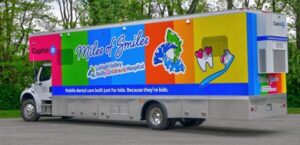
Early dental visits, ideally by age one or when the first tooth appears, are critical to a child’s long-term health and development. These “well-baby” appointments help prevent cavities, reduce pain, and support healthy eating, speech, and learning. They also give parents practical guidance on caring for young teeth and avoiding common risks, such as prolonged bottle use or inadequate brushing.
Tooth decay remains the most common chronic disease among children in the United States, and it disproportionately affects those in rural areas. Limited access to providers, transportation challenges, and reduced exposure to fluoridated water all contribute to higher rates of untreated decay. Without early intervention, small issues can quickly become serious, leading to pain, infection, and the need for more complex care, often far from home.
Mobile dental units address these barriers by delivering care where children already are, such as schools and community centers. Fully equipped to provide exams, cleanings, X-rays, fluoride treatments, sealants, basic and even full restorative services, these mobile clinics eliminate the need for long travel and reduce missed school and work time.
Beyond treatment, mobile health clinics emphasize prevention and education. Families learn how to care for their children’s teeth, understand the role of diet in oral health, and recognize early signs of problems. This early support helps reduce long-term costs and improves overall health outcomes.
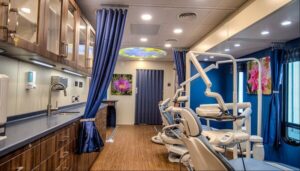 Mobile programs also strengthen community trust and engagement. Often operated through partnerships with public health organizations, dental schools, and nonprofits, they connect families to care in familiar, accessible settings. Advances in portable technology and digital records ensure that services meet modern clinical standards, while flexible staffing models expand the reach of dental professionals into areas without permanent providers.
Improving children’s oral health requires both early care and consistent access. Mobile dental clinics provide a practical, scalable solution, bringing prevention, education, and treatment directly to rural communities. By meeting families where they are, these programs help ensure more children can grow up healthy, confident, and free from preventable dental disease.
Oral health disparities in rural communities reflect a mix of workforce shortages, limited insurance coverage, and broader geographic and socioeconomic barriers. These challenges make it harder for families to access consistent care, reinforcing the need for solutions such as mobile dental clinics that bring services directly to where people live.
Mobile dental clinics directly address these disparities by expanding access to preventive and basic restorative care. By operating at schools, community centers, and other local settings, they help ensure that children, seniors, and underserved families receive timely care, reducing the impact of these systemic barriers and improving oral health across rural populations.
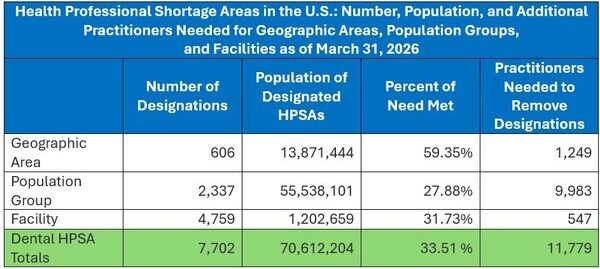
The chart below is derived from the Designated Health Professional Shortage Areas Statistics, Second Quarter of Fiscal Year 2026, HPSA Quarterly Summary.
In the map below, rural communities are represented in green while metropolitan areas are represented in blue. Rural communities can have a shortage of oral health providers at a county or township level where populations are not significant enough to support permanent dental care facilities. Across rural and metropolitan areas, low-income areas and facilities serving at-risk populations, such prison and homeless populations, have a deficit of dental health providers as well. According to the HRSA, in late 2025, 5,185 of the United States’ 7,254 Dental Health Professional Shortage Areas (HPSAs) were in rural areas, as reflected in the map below.
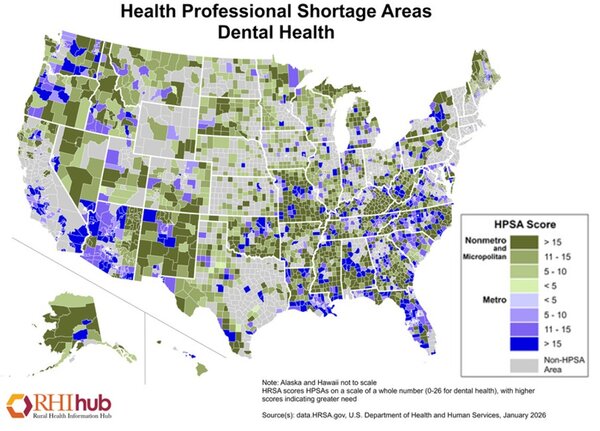
Above map from the Rural Health Information Hub