


University healthcare systems and colleges are increasingly leveraging mobile health clinics as an effective tool to expand access to medical care in their communities. These mobile units, operated by or affiliated with academic institutions, bring vital healthcare to underserved urban and rural populations, offering an impactful way to bridge the gap between patients and healthcare providers.
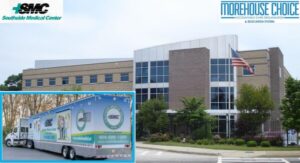 Mobile healthcare clinics are crucial to how educational institutions, such as university health systems and community colleges, expand their reach, serve communities, and train the next generation of healthcare professionals. These programs create an effective and scalable healthcare model that benefits students, schools, and the communities they serve.
For students in nursing, dentistry, public health, and other medical and allied health programs, mobile health clinics offer something they can’t get in a lecture hall: real-life experience. Educational institutions often use mobile clinics as mobile laboratories where students and residents can perform or practice:
Sometimes, using mobile simulation labs, students can learn and practice a multitude of disciplines. At other times, they are on actual mobile medical, dental, or mammography clinics, traveling to urban and rural areas to provide health services to the community while offering real-world training for students and practitioners.
This flexibility allows them to address the specific health needs of each community they serve. Gaining hands-on experience is key to developing well-rounded, community-focused professionals. At the same time, involving students and residents in staffing the mobile units helps lower the overall cost of running the program, which is essential to educational institutions and mobile health programs.
Mobile health programs run by teaching hospitals collaborate with community organizations, local school districts, and other healthcare providers such as hospital systems and area clinics. These partnerships amplify the program’s reach and enhance health outcomes by leveraging local knowledge, combining resources, and fostering trusted community relationships.
The most significant impact of mobile clinics proactively delivering care to vulnerable populations and addressing gaps in the healthcare system.
Here are just a handful of prominent institutions leading the charge:
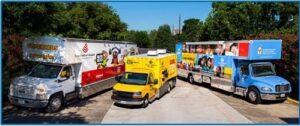 quality medical care to children who might otherwise lack access to essential health services.
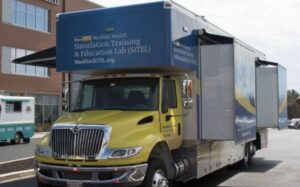 is known as the ICU Provider Mobile Bootcamp. This fully equipped, 40-foot simulation laboratory travels to MedStar Health facilities throughout the Baltimore and Washington, D.C. region. In 2020, when an urgent training need arose, the Mobile Sim Lab trained more than 2,600 healthcare workers on a range of skills.
 Like hospitals, university healthcare systems and community colleges are increasingly utilizing mobile health clinics to extend their reach in providing care to underserved populations. Although hospitals operate mobile clinics to provide much-needed access to care in their communities, they are typically for-profit organizations. While universities and colleges usually prioritize research and education, they also deliver medical care.
Mobile clinics operated by universities or colleges are another touchpoint for expanding access to care. A local hospital may offer mammography services to women, while a university in the same area provides dental care to children, or vice versa. That’s one reason the two organizations should collaborate on their offerings, ensuring coverage of different disciplines in their overlapping service areas.
Mobile health in academic settings is experiencing significant growth. They have the flexibility and ingenuity to reimagine what healthcare access should look like and are a natural extension of the academic health mission. It is a unique learning experience that delivers care to those who need it most while preparing to become compassionate, skilled, and community-oriented healthcare professionals. By providing reduced staffing costs and access to philanthropic funding, university and college mobile health clinic programs are not only effective, they’re sustainable. They are also at the forefront of technology and often youthful ingenuity.
As technological advances and partnerships continue to grow stronger, mobile health clinics will remain a vital extension of the pillars of academic medicine: Care, Education, and Research.