

Healthcare organizations today face mounting challenges, including workforce shortages, increasing patient acuity, rapid technological change, and growing expectations for patient safety. As a result, healthcare leaders are seeking innovative ways to ensure clinicians receive high-quality training without disrupting patient care operations.

One of the most effective solutions is mobile simulation labs. These fully equipped, mobile healthcare trucks bring advanced simulation-based education directly to healthcare professionals, eliminating many of the barriers associated with traditional simulation centers. By delivering realistic, hands-on learning experiences at the point of care, mobile simulation laboratories are expanding access to education, strengthening clinical competency, and improving workforce readiness.
Traditional simulation training often requires clinicians to travel to dedicated simulation centers located at universities, academic medical centers, or large hospitals. While these facilities provide valuable educational experiences, travel costs, staffing limitations, and scheduling challenges can restrict participation.
These barriers are particularly significant for rural hospitals, community health centers, EMS agencies, and long-term care facilities. Geographic isolation and limited resources can make it difficult for healthcare professionals to access ongoing training opportunities.
Mobile simulation laboratories solve this problem by bringing education directly to the learner. Instead of sending staff away for training, organizations can deliver advanced simulation experiences on-site, reducing travel time, minimizing disruptions to patient care, and increasing participation rates.
This accessibility allows healthcare organizations to provide consistent, high-quality education regardless of location. As a result, clinicians working in underserved communities gain access to the same advanced training opportunities available in larger healthcare systems.
The effectiveness of simulation-based education depends on realism. Mobile simulation laboratories are designed to replicate actual clinical settings, enabling learners to practice skills in environments that mirror the situations they encounter every day.
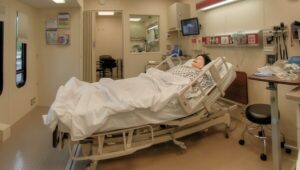
Modern mobile simulation units may include:
Many mobile sim laboratories can also support procedural and surgical skills training through a variety of simulation technologies:
These technologies allow participants to engage in realistic clinical scenarios ranging from cardiac arrest and trauma response to respiratory failure and pediatric emergencies. Learners gain valuable hands-on experience in a controlled environment where mistakes become learning opportunities rather than patient safety risks.
Perhaps the greatest advantage of mobile simulation laboratories is their ability to improve clinical performance while protecting patients from unnecessary risk.
Simulation-based education allows healthcare professionals to repeatedly practice critical procedures, refine decision-making skills, and receive immediate feedback from experienced instructors. Through structured debriefing sessions, participants can identify strengths, address performance gaps, and reinforce best practices.
Training often focuses on both technical and non-technical competencies, including:
Because learners can practice repeatedly in a realistic environment, they develop greater confidence and proficiency before applying those skills in actual patient care situations. This deliberate practice contributes to improved clinical outcomes, fewer medical errors, and a stronger culture of patient safety.
Successful patient care depends on effective collaboration among physicians, nurses, respiratory therapists, paramedics, pharmacists, and other healthcare professionals. Communication failures remain one of the leading contributors to preventable medical errors.
Mobile simulation laboratories provide an ideal setting for interprofessional education by allowing entire care teams to train together in realistic clinical scenarios.
Team-based simulations often focus on:
These exercises help participants understand how their individual responsibilities contribute to overall team performance. By practicing together, healthcare professionals develop stronger communication habits and greater trust in one another’s abilities.
The result is improved coordination during high-stress situations and enhanced patient safety across the organization.
Many of healthcare’s most critical events occur infrequently but require immediate and coordinated responses when they do happen. Pediatric cardiac arrests, severe trauma cases, mass casualty incidents, and disaster response situations all demand a high level of readiness.
Because clinicians may encounter these events only occasionally, maintaining competency can be difficult.
Mobile simulation laboratories provide an effective way to rehearse rare but high-risk scenarios. Organizations can test emergency protocols, evaluate communication pathways, identify operational weaknesses, and refine response strategies before a real crisis occurs.
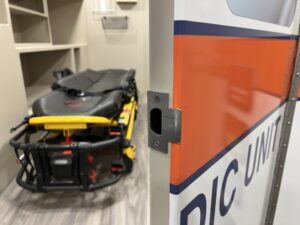
Hospitals, EMS agencies, fire departments, and public health organizations frequently use mobile simulation programs to strengthen disaster preparedness and improve emergency response capabilities. These realistic training experiences help ensure that teams are prepared when every second counts.
Building and maintaining a permanent simulation center requires substantial investments in facilities, equipment, technology infrastructure, staffing, and maintenance. For many organizations, these costs can be prohibitive.
Mobile simulation laboratories offer a more flexible and scalable alternative. A single mobile unit can serve multiple hospitals, clinics, educational institutions, and community organizations, maximizing utilization while reducing overall costs.
Additional benefits include:
This model enables healthcare organizations to provide advanced simulation-based education without the significant capital investment associated with a permanent simulation center.
As healthcare continues to evolve, clinicians must continually update their knowledge and skills. New technologies, changing treatment protocols, and regulatory requirements make continuing education essential.
Mobile simulation laboratories support workforce development by providing convenient access to ongoing training opportunities within the clinician’s own community. Healthcare professionals can maintain certifications, learn new procedures, practice infrequently used skills, and stay current with emerging standards of care without the logistical challenges of off-site training.
For organizations facing staffing shortages and scheduling constraints, this flexibility makes continuing education more practical and sustainable.
Mobile simulation laboratories are transforming how healthcare education is delivered. By bringing advanced training directly to clinicians, these programs remove barriers to learning while providing realistic, high-impact educational experiences.
Beyond improving clinical skills, mobile simulation laboratories strengthen teamwork, enhance emergency preparedness, support workforce development, and promote a culture of patient safety. Their flexibility, scalability, and accessibility make them particularly valuable for rural healthcare providers, community organizations, EMS agencies, academic institutions, and large healthcare systems alike.
As the demand for competency-based training continues to grow, mobile simulation laboratories will play an increasingly important role in preparing healthcare professionals to meet the challenges of modern patient care. Organizations that invest in mobile simulation are not simply expanding educational opportunities; they are making a strategic investment in workforce excellence, operational performance, and better patient outcomes.
For additional information about Mobile SimLabs, see our white paper:
Download the White Paper to Learn More: