



For millions of Americans, accessing hearing care isn’t simply a matter of making an appointment; it’s a matter of geography. In many rural communities, the nearest audiologist may be hours away. Older adults who no longer drive, Veterans with disabilities, parents balancing work and family responsibilities, and employees with demanding schedules often delay care because getting to a clinic is difficult.
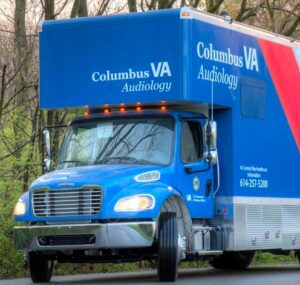
Mobile audiology clinics are changing that reality by bringing comprehensive hearing services directly to rural communities, schools, nursing homes, workplaces, and other underserved locations. Equipped with advanced diagnostic equipment, sound-treated testing booths, hearing aid technology, and tele-audiology capabilities, these specialized mobile health clinics are making hearing care more accessible than ever before.
Hearing loss is one of the most common chronic health conditions in the United States, affecting approximately 38 million Americans. While it occurs in every community, rural populations experience hearing loss at significantly higher rates than urban residents.
Several factors contribute to this disparity. Many rural residents work in agriculture, mining, forestry, construction, manufacturing, and oil and gas production; occupations with prolonged exposure to hazardous noise. Recreational activities such as hunting, operating power equipment, and off-road motorsports further increase lifetime noise exposure.
Unfortunately, these same communities often have the fewest hearing care providers. More than three-quarters of U.S. counties face shortages of hearing health professionals, forcing many patients to travel 50 to 100 miles for routine evaluations or hearing aid adjustments. For older adults or those with limited transportation, these distances often result in delayed or neglected care.
Untreated hearing loss affects much more than communication. It has been linked to:
As hearing loss progresses, everyday conversations become more difficult, relationships can suffer, and many individuals withdraw from social activities. Early diagnosis and treatment help preserve communication, independence, and overall well-being.
Mobile audiology clinics make early intervention possible by bringing services directly to patients before hearing loss significantly impacts their lives.
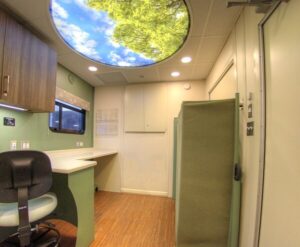
A mobile audiology clinic is a specially designed vehicle that functions as a fully equipped hearing healthcare facility. Unlike temporary screening stations or traveling audiologists, these mobile clinics provide a controlled clinical environment with professional sound-treated audiology booths, diagnostic testing equipment, hearing aid programming stations, consultation areas, and secure telehealth technology.
Instead of requiring patients to travel long distances, the clinic travels to them.
Mobile units commonly serve at:
The result is convenient access to professional hearing care close to home.
Audiology vehicles require unique engineering that differs from many other mobile healthcare units.
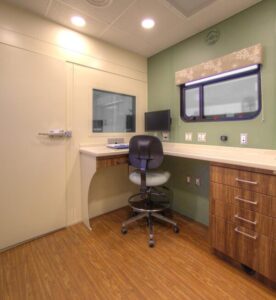
At the center of most clinics is a sound-treated audiology booth that provides a controlled acoustic environment meeting clinical testing standards. Because these booths are heavy and must remain structurally secure during transportation, they require specialized integration into the vehicle.
Many mobile audiology clinics also feature larger testing booths to accommodate wheelchair users, parents accompanying children, or clinicians assisting patients with special needs. ADA accessibility often requires sufficient turning space for wheelchairs, while pediatric evaluations may require room for caregivers to remain inside during testing.
Supporting these larger booths and specialized equipment typically requires rugged commercial truck chassis designed to safely carry significant weight while maintaining ride quality and long-term durability.
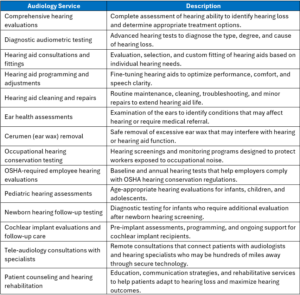
Today’s mobile hearing clinics provide much more than basic hearing screenings.
Common services include:
One of the greatest advantages of mobile healthcare is flexibility. Rather than asking patients to overcome transportation barriers, providers bring care to familiar, trusted locations.
For many small towns, a mobile clinic provides the only practical access to routine hearing care. Community centers, schools, churches, libraries, county fairs, and local health departments often serve as convenient locations for scheduled clinic visits.
Residents of assisted living facilities and nursing homes frequently face mobility and transportation challenges. Mobile clinics provide hearing evaluations, hearing aid maintenance, and follow-up appointments without requiring residents to leave their facilities, helping them maintain communication, independence, and cognitive health.
Early diagnosis is essential for speech and language development. Mobile audiology programs bring hearing evaluations directly to schools and community health programs, making it easier for children who require follow-up testing after newborn screenings or who show signs of hearing loss to receive timely care.
Industrial employers in rural areas also benefit from mobile audiology services. Manufacturing plants, construction companies, mining and oil field operations, and other high-noise workplaces often require OSHA-compliant hearing conservation programs. Mobile clinics perform baseline testing, annual hearing evaluations, and occupational hearing assessments onsite, minimizing employee downtime while supporting workplace safety and regulatory compliance.
Transportation is only one obstacle to hearing healthcare. Mobile audiology clinics also address:
For many patients, receiving care close to home and work makes the difference between seeking treatment and postponing it indefinitely.
Tele-audiology has become an important extension of mobile healthcare. Using secure digital connections, mobile clinics allow patients to receive consultations from specialists who may be hundreds of miles away.
Remote services may include:
Combining mobile clinics with telehealth expands access to specialized care while improving convenience for both patients and providers.
Successful mobile audiology programs often partner with hospitals, public health agencies, schools, employers, nonprofit organizations, tribal communities, faith-based organizations, and senior service providers. These partnerships help identify patients, coordinate outreach efforts, and build trust within underserved communities.
As hearing loss gains recognition as an important component of overall health, mobile audiology clinics are becoming an increasingly valuable part of community healthcare strategies.
No one should go without hearing care simply because they live too far from a provider.
Mobile audiology clinics offer an effective solution by delivering hearing evaluations, hearing aid services, occupational testing, pediatric assessments, and tele-audiology directly to the communities that need them most.
For hospitals, health systems, public health agencies, employers, and nonprofit organizations, mobile audiology expands access while promoting earlier diagnosis, improved patient outcomes, and better quality of life.
When hearing care comes to the patient, distance is no longer a barrier to healthier hearing.
Learn more about the importance of Mobile Health Clinics here.