



According to the USDA Economic Research Service, “despite a slight decline in the U.S. overall obesity rate from March 2022–2023 to March 2023–2024, rural obesity rates rose 0.5 percentage points during the same time.” This statistic highlights a troubling reality: while the nation has seen modest progress overall, many rural communities continue moving in the opposite direction.
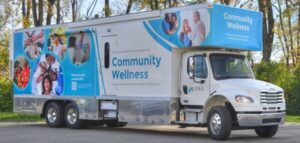
Obesity remains one of the most pressing public health challenges in the United States, and its impact is especially pronounced in rural America. Nearly half of adults living in nonmetropolitan communities are affected by obesity, placing them at significantly greater risk for diabetes, cardiovascular disease, hypertension, stroke, sleep apnea, osteoarthritis, and other chronic conditions.
However, obesity in rural communities is rarely the result of individual lifestyle choices alone. Geographic isolation, healthcare provider shortages, limited transportation, food insecurity, and economic barriers all contribute to an environment where maintaining a healthy weight can be extraordinarily difficult.
As healthcare organizations continue seeking innovative ways to improve health equity and expand access to preventive care, mobile health clinics have emerged as one of the most effective tools for delivering obesity prevention, education, screening, and long-term management directly into underserved communities.
The causes of rural obesity are complex and interconnected. Unlike urban areas, where healthcare facilities, grocery stores, and fitness resources are more readily available, rural residents frequently encounter barriers that make healthy living far more challenging.
The table below summarizes some of the most significant factors contributing to higher obesity rates in rural communities.
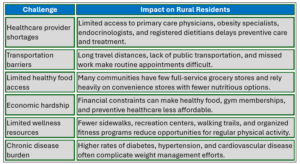
These factors don’t exist independently. They reinforce one another, creating significant health disparities that can persist for generations if left unaddressed.
One of the greatest obstacles is simply accessing care. Many rural counties have been designated as Health Professional Shortage Areas (HPSAs), leaving residents with limited access to primary care providers and even fewer specialists trained in obesity medicine, endocrinology, or nutrition. When every appointment requires time away from work, childcare arrangements, transportation costs, and long drives, preventive healthcare often takes a back seat. As a result, obesity frequently goes untreated until it contributes to more serious health complications.
Instead of expecting patients to travel to healthcare, mobile health clinics bring healthcare directly to patients.
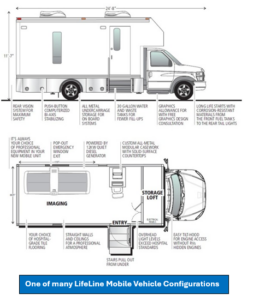
Modern mobile medical units function as fully equipped outpatient clinics with examination rooms, laboratory capabilities, telehealth technology, secure electronic health records, and advanced diagnostic equipment. Rather than serving a single location, these clinics travel scheduled routes throughout multiple rural communities.
Healthcare organizations can deploy mobile clinics where people already gather. Meeting patients where they live and work dramatically reduces transportation barriers while increasing participation in preventive health programs.
Effective obesity management requires much more than encouraging patients to eat healthier and exercise more. Successful treatment often includes coordinated medical care, nutrition counseling, behavioral health support, chronic disease management, diagnostic testing, and regular follow-up.
Mobile health clinics provide an ideal platform for delivering these services in one convenient location.
Depending on organizational goals, services may include:

Many mobile programs are also expanding beyond traditional screening by incorporating advanced diagnostic technologies that provide a more complete picture of a patient’s health.
One example is the GE HealthCare Bone & Metabolic Health Prodigy™ DXA system, which can be integrated into appropriately designed mobile imaging units. Unlike BMI alone, dual-energy X-ray absorptiometry (DXA) provides highly accurate body composition measurements, helping clinicians distinguish fat mass from lean muscle while also evaluating bone mineral density.
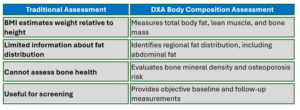
For patients pursuing weight-loss interventions, these measurements help providers determine whether progress reflects healthy fat loss while preserving lean muscle mass, an important consideration that cannot be evaluated through body weight alone.
Mobile health clinics excel at reaching populations that traditionally experience the greatest barriers to healthcare, including:
For many of these individuals, a mobile clinic represents their easiest, and sometimes only, opportunity to receive preventive healthcare.
By combining obesity screening, chronic disease management, advanced body composition analysis, and patient education in a single visit, providers can identify health risks earlier and initiate interventions before complications worsen.
Healthcare is most effective when it becomes part of the community rather than something delivered from outside it.
Mobile health clinics naturally foster partnerships with schools, churches, employers, extension offices, public health departments, community centers, and nonprofit organizations that already have trusted relationships with residents. Because mobile clinics return on predictable schedules and are recognizable with graphics representing their home facilities, they become a familiar presence within the community, encouraging residents to seek care before health problems become more serious.
Not every rural community has access to obesity medicine specialists, endocrinologists, registered dietitians, or metabolic health experts. Mobile clinics help bridge this gap through telehealth.
Patients can receive physical assessments, laboratory testing, DXA body composition scans, and vital sign measurements locally while consulting virtually with specialists located hundreds of miles away. This hybrid model combines the convenience of local access with the expertise of larger healthcare systems.
Beyond individual patient care, mobile health clinics generate valuable population health data.
Routine screenings, including biometric measurements, laboratory testing, and body composition analysis, allow healthcare organizations to identify trends in obesity, diabetes, cardiovascular disease, osteoporosis, and other chronic conditions across multiple rural communities.
By combining clinical services with data-driven decision-making, healthcare systems can continually refine outreach strategies and better address community health needs.
Constructing permanent healthcare facilities in every rural community is rarely practical. Population density, workforce shortages, and financial constraints often make traditional expansion difficult.
Mobile health clinics offer a scalable alternative. A single mobile unit can serve multiple communities throughout the week while extending the reach of hospitals, health systems, federally qualified health centers, imaging providers, public health departments, and nonprofit organizations.
Additional benefits include:
When equipped with advanced technologies such as bone and metabolic health scans, mobile clinics can deliver sophisticated metabolic and bone health assessments that traditionally required visits to larger healthcare facilities, thereby expanding access to high-quality diagnostic care in rural communities.
The growing obesity crisis in rural America requires more than traditional healthcare delivery models. Lasting progress depends on removing barriers to care, expanding preventive services, and meeting patients where they are.
Mobile health clinics help reshape rural healthcare by bringing obesity prevention, chronic disease management, nutritional counseling, behavioral health support, telehealth, and advanced diagnostic imaging directly into underserved communities. Technologies such as bone & metabolic health scan equipment further enhance these efforts by providing precise assessments of body composition and bone health, enabling more personalized treatment and better long-term monitoring.
As healthcare systems continue to prioritize prevention, population health, and health equity, mobile health clinics will play an increasingly important role in addressing one of rural America’s greatest public health challenges. By combining flexibility, advanced technology, community partnerships, and patient-centered care, these mobile programs are improving access, strengthening communities, and creating healthier futures, one stop at a time.