

PROFESSIONAL SPACE IN MOTION
When disaster strikes, access to healthcare is often one of the first things disrupted. Hurricanes, floods, wildfires, pandemics and public health emergencies strain already fragile systems. Hospitals can be damaged or inaccessible, clinics may be overwhelmed and patients struggle to get the care they need.
That’s where mobile health clinics step in. These units provide immediate, flexible and important services to the heart of affected communities. Mobile clinics support hospital and university medical systems, and clinics as lifelines in motion, delivering state-of-the-art medical care when people need it most.
Hospitals are the backbone of emergency response, but when their doors can’t handle the surge or when patients can’t reach them, mobile clinics extend care into the community.
By sending mobile health clinics into disaster zones, hospitals can:
A hospital’s mobile clinic parked at a shelter or community center becomes a continuity-of-care hub. It’s a place where patients can refill prescriptions, get wound care or receive screenings, without adding strain to hospital capacity.
This extension of hospital reach ensures that people don’t go without necessary care, even when their community is under extreme stress. For families, it can mean the difference between waiting hours in an ER or receiving quick, compassionate care in their neighborhood.
Mobile clinics also support the healthcare workforce. In disaster situations, burnout and fatigue rise quickly. Having a mobile unit on the ground allows hospitals to distribute workload more evenly, protecting staff while still meeting community needs.
Preparedness isn’t only about evacuations and emergency services. It’s also about ensuring ongoing access to healthcare before, during and after disasters.
Mobile clinics are increasingly integrated into public health and emergency preparedness plans. They can:
In wildfire-prone regions, mobile units provide respiratory care to individuals affected by smoke inhalation, including first responders. In flood-hit areas, they administer tetanus shots and clean wounds to prevent infections. Their adaptability makes them indispensable during every stage of disaster, before, during and long after the headlines fade.
The recovery phase is where mobile units shine most. Long after the media trucks have left, they remain in neighborhoods, providing wellness checks and counseling. For many communities, this steady presence becomes a symbol of resilience and a source of reassurance in their local hospital.
Preparedness also builds trust. When people see mobile units regularly, whether at a school fair or a local event, they are more likely to welcome them in times of crisis. That familiarity transforms response into a continuation of care, not a disruption.
Not all crises are driven by weather. The opioid epidemic, amplified by the COVID-19 pandemic, created a wave of overdoses and substance use emergencies that required an equally urgent response.
When lockdowns cut people off from support networks, overdose rates rose sharply. Mobile health clinics became a frontline tool in this fight. They offered:
By parking outside shelters, community centers or encampments, mobile units removed barriers to care. They meet people where they are, building trust with those who might not walk into a traditional clinic.
This mobility allows health systems to respond to public health emergencies and save lives in the process. It also shows the flexibility of mobile care: one week, a unit might be providing vaccines, and the next, it could be focused on overdose prevention or wellness exams. That adaptability is why mobile health remains a critical part of community resilience.
The lesson is clear: when healthcare comes to people instead of waiting for people to go to a healthcare facility, lives are saved. That shift in perspective is one of the most important takeaways from recent public health crises.
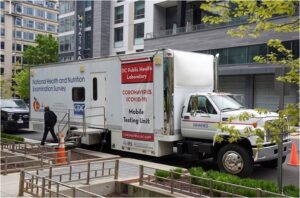
Vaccinations, Grants and Lasting Community ImpactThe COVID-19 pandemic also highlighted another important role for mobile health clinics: vaccinations and mass public health campaigns.
For many, access to vaccines was limited by geography, transportation or scheduling. Mobile clinics solved that problem by rolling directly into communities, setting up in church parking lots, schoolyards and workplaces.
Their presence not only improved access but also helped ease vaccine hesitancy. Seeing trusted providers in familiar community spaces made people more comfortable getting the shot. In some rural areas, mobile clinics became the primary vaccination site, making it possible for thousands to receive timely protection.
The expansion of services was made possible, in part, by federal funding. The Substance Abuse and Mental Health Services Administration (SAMHSA) provided grants that supported mobile health programs during the pandemic. These grants enabled clinics to expand staffing, broaden mental health and addiction services and cover operational costs.
What began as an emergency response became the foundation for long-term mobile health strategies. Many clinics that ramped up their operations during the COVID-19 pandemic continue to serve communities today, demonstrating that investments made in a crisis can yield a lasting impact.
The pandemic shifted perception as well. What once might have been seen as a temporary solution is now regarded as a permanent, practical part of the healthcare system. Grants and funding made that possible, but the results, the trust built and the care delivered made it sustainable.
For public health leaders, this shift was eye-opening. Mobile care isn’t just a backup plan; it’s a permanent part of preparedness for the next crisis and for ongoing healthcare services to rural and urban communities.
In any emergency, trust matters as much as logistics. People are more likely to seek care if they recognize and feel comfortable with the providers offering it.
Mobile clinics excel in building that trust. By offering dental, medical, mammography or other services, they become familiar fixtures in the community. When disaster strikes, the same mobile unit and staff arrive, not as strangers, but as trusted providers.
The familiarity is especially powerful in communities where mistrust of the healthcare system runs deep. Whether due to language barriers or past discrimination, many people hesitate to seek care in traditional settings. A mobile health clinic in a school parking lot or community center feels more approachable and less intimidating.
Trust accelerates recovery. It ensures that vulnerable groups such as seniors, undocumented residents or those experiencing homelessness aren’t left behind in the rush of disaster response. And when patients feel seen, heard and respected, they are more likely to return, not just during emergencies but for follow-up care that improves long-term health outcomes.
For providers, this trust is just as valuable. Staff who know their patients and understand community dynamics can provide more effective care and boost the reputation of their home organization. The relationships built through mobile outreach make emergency response faster, smoother and more effective.
If the past decade has taught us anything, it’s that emergencies will keep coming. We are experiencing stronger storms and longer wildfire seasons. Pandemics and public health emergencies remain unpredictable. Communities everywhere are being asked to do more with less.
Mobile health clinics are uniquely suited for this reality. They are:
Technology is expanding these possibilities even further. Today’s mobile units can be equipped with telehealth capabilities, digital diagnostics, portable labs and dental and imaging equipment. This makes them more versatile than ever before, able to handle a broad spectrum of care in compact, efficient spaces.
Mobile health clinics won’t replace hospitals, but they will continue to complement them, bringing flexibility, adaptability and compassion to healthcare when and where it’s needed most. As communities face future crises, the organizations that invest in mobile care now will be the ones best prepared to respond.
Ultimately, mobility is about readiness. It’s about having care on wheels that can meet the moment, whether that’s a pandemic, a flood or a neighborhood health fair. The value is not just in the response, but in the reassurance it provides communities every single day.
Disasters can’t always be predicted, but healthcare access can be ensured. Mobile health clinics have consistently proven to be more than temporary solutions. They are important tools for resilience, bridging the gap between crisis and care.
Whether it’s treating injuries in the aftermath of a hurricane, delivering vaccines during a pandemic, addressing overdoses or offering mental health support, mobile clinics step in wherever communities need them most.
In moments of chaos, they offer not just care but hope. That makes them one of the most powerful lifelines in modern healthcare.